
Chatbot Use Cases by Industry
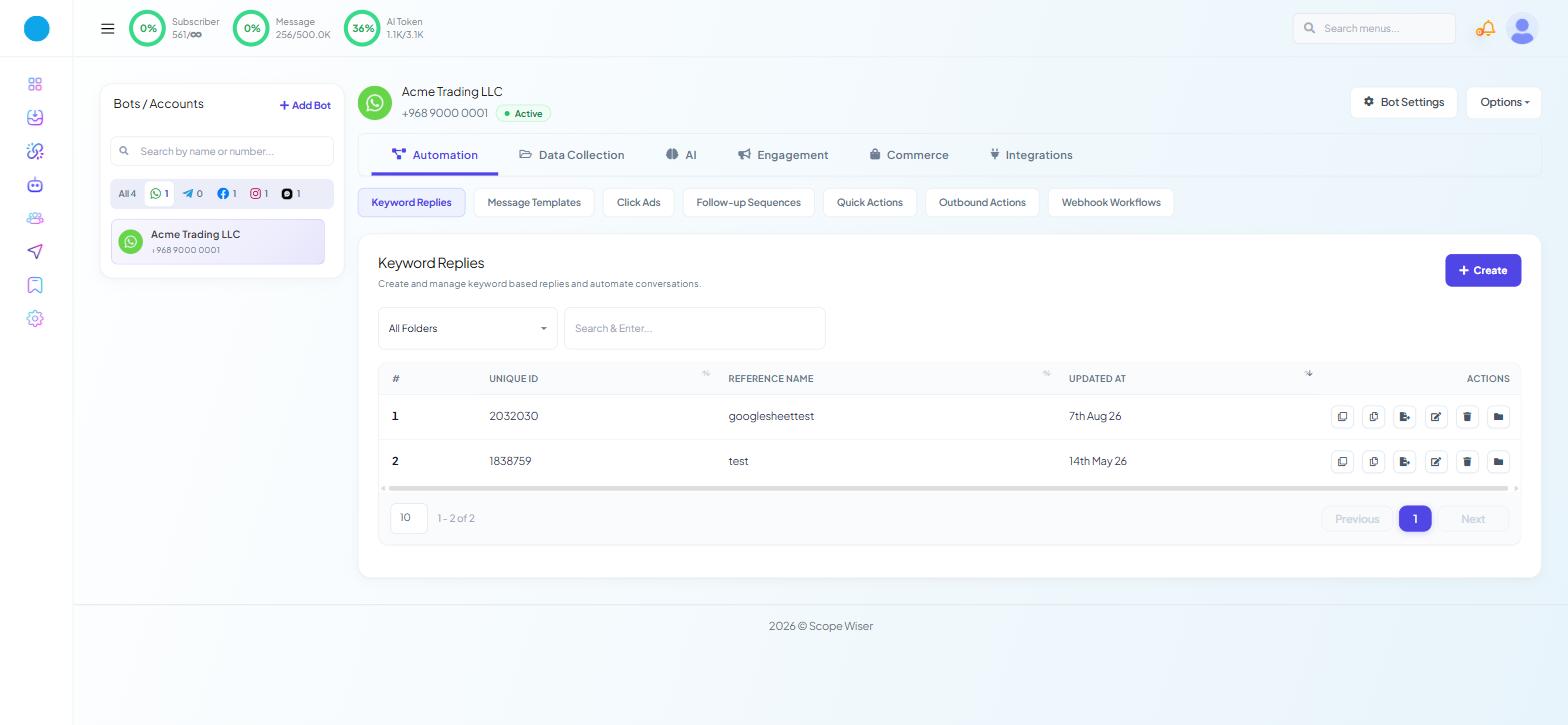
"What should our chatbot do?" is the wrong first question. Every industry list you read will give you thirty plausible answers, and a team that tries to build thirty things ships none of them.
The better question is which of your conversations are repetitive enough to automate and safe enough to automate now. This guide gives you a way to sort them, then works through what that sorting typically produces in eleven sectors.
Four categories, and why the order matters
Almost every use case falls into one of these:
Support deflection — answering the questions your team answers over and over.
Revenue and conversion — qualification, product discovery, recovery, upsell.
Operations and compliance — intake, verification, documentation, audit trails.
Internal enablement — helping your own staff find policies and draft replies.
Start in the first category. It has the highest volume, the lowest risk and the clearest measurement, and it teaches you how your customers actually phrase things — which is the input you need for everything else. Move into the second once the first is stable. Only attempt the third when you have the controls to support it, because a mistake in a compliance flow costs more than a mistake in an opening-hours flow.
A rule that holds across sectors: start where the volume is high and the risk is moderate.
Retail and eCommerce
The densest concentration of automatable conversation anywhere, because the questions repeat and the answers are lookups.
Guided selling — a few questions about size, budget and use, then a shortlist.
Order status. "Where is my order" is usually the single largest category in a retail inbox.
Returns and exchanges — eligibility check, then the label or the pickup slot.
Basket recovery — one specific, well-timed message, not a sequence of five.
Loyalty and promotion queries — points, tiers, whether a code applies.
What separates the ones that work: integration with real inventory and shipping data, so the bot can answer rather than apologise; and a clean handover for damage and fraud cases.
Watch: order-status contacts handled without an agent, basket recovery rate, return processing time.
Banking, payments and fintech
High volume, high sensitivity. The automation opportunity is real but the guardrails are the project.
Onboarding guidance — what documents are needed, how long verification takes.
Card lifecycle — lost, blocked, expiring, delivery status.
Transaction queries and the first stage of dispute intake.
Fraud education — explaining a suspicious request rather than acting on it.
Repayment reminders and eligibility pre-checks.
Guardrails that matter: strong authentication before anything account-specific is revealed, an audit trail of every automated interaction, and a firm boundary against anything that reads as financial advice.
Watch: call-centre deflection, dispute cycle time, audit pass rate.
Insurance
Claims are structured intake problems, which is exactly what conversational flows are good at.
First notice of loss — guided intake with photo and document collection, and a claim reference issued at the end.
Coverage questions — what is and is not included, excesses, exclusions.
Claim status, which otherwise generates an enormous volume of "any update?" contacts.
Renewal prompts and life-event cross-sell.
Watch: intake completion rate, reopening rate — a high one means the first intake was incomplete — and time to first adjuster contact.
Healthcare and clinics
The administrative half of healthcare is one of the most proven categories. The clinical half is not, and the boundary needs to be explicit.
Booking, rescheduling and reminders. This is the core one, and reminders alone usually justify the project by reducing missed appointments.
Pre-visit intake — history, insurance details, forms completed before arrival.
Preparation instructions and wayfinding.
Post-treatment check-ins and medication reminders, with clear escalation rules.
Do not automate diagnosis or triage decisions without clinical governance, and make it obvious to the patient that they are talking to an automated system. Handle patient data under whatever regime applies to you before you send a single message.
Watch: missed-appointment rate, reception call volume, booking completion rate.
Travel and hospitality
Demand is spiky and the worst spikes happen exactly when your team is least able to cope — during a disruption.
Booking assistance and upgrades.
Disruption handling: delays, rebooking options, refund eligibility.
Pre-arrival messages — check-in instructions, transport, what to bring.
In-stay service requests.
Loyalty status and points.
The disruption case is where automation is worth most, because volume multiplies at the moment the answer is most repetitive.
Watch: direct conversion from chat, resolution speed during disruption, upsell take-up.
Education
Enquiry volume is seasonal and enormously concentrated, which makes automation unusually valuable at exactly two points in the year.
Admissions — programme matching, entry requirements, deadlines, document checklists.
Student services — timetables, policies, fees, financial support.
IT support — password resets and device setup.
Careers — scheduling, application questions.
Watch: enquiry-to-application conversion, response time in peak weeks, ticket deflection.
Telecoms and utilities
Very high volume, very repetitive, and the questions rarely need judgement.
Plan comparison and upgrades based on actual usage.
Bill explanation, payment links, instalment arrangements.
Outage status and estimated restoration.
Guided troubleshooting before an engineer is dispatched.
Watch: billing contact rate, first-contact resolution, unnecessary engineer visits avoided.
Logistics, manufacturing and supply chain
Here the highest-value automation is often internal or partner-facing rather than consumer-facing.
Shipment visibility and documentation.
Supplier and quotation enquiries.
Stock queries and reorder triggers.
Standard-procedure lookup, incident reporting and safety checklists.
Defect reporting with photos and structured metadata.
Watch: shipment-status emails avoided, quotation cycle time, checklist completion.
Property and real estate
A lead-response speed problem more than a support problem.
Qualification — budget, area, timing.
Viewing scheduling, confirmation and rescheduling.
Tenant maintenance requests and rent queries.
Document checklists and signing status.
Watch: lead response time, viewings booked per enquiry, maintenance cycle time.
B2B SaaS and professional services
Tier-one support: settings, billing, common errors.
Documentation-grounded answers to "how do I…".
Onboarding checklists and progress nudges.
Lead capture routed to the right person with context attached.
Draft replies and conversation summaries for your own support team.
Watch: time to first response, deflection rate, onboarding completion.
Public services
Service navigation — eligibility, required documents, deadlines.
Appointment scheduling for offices and licensing.
Incident reporting.
Multilingual access, which is often the largest accessibility gain available.
Watch: call volume, resolution time, language coverage.
Turning a list into a first build
Whichever sector you are in, the method is the same and it takes about a day.
Read your own inbox. Take the last two hundred conversations and group them by what the person wanted. The top three groups are your candidates; do not guess, because the guess is usually wrong in an interesting way.
Check each candidate against two tests. Is the answer the same for everyone who asks? And what happens if the automation gets it wrong? Automate the ones where the answer is stable and the failure is cheap.
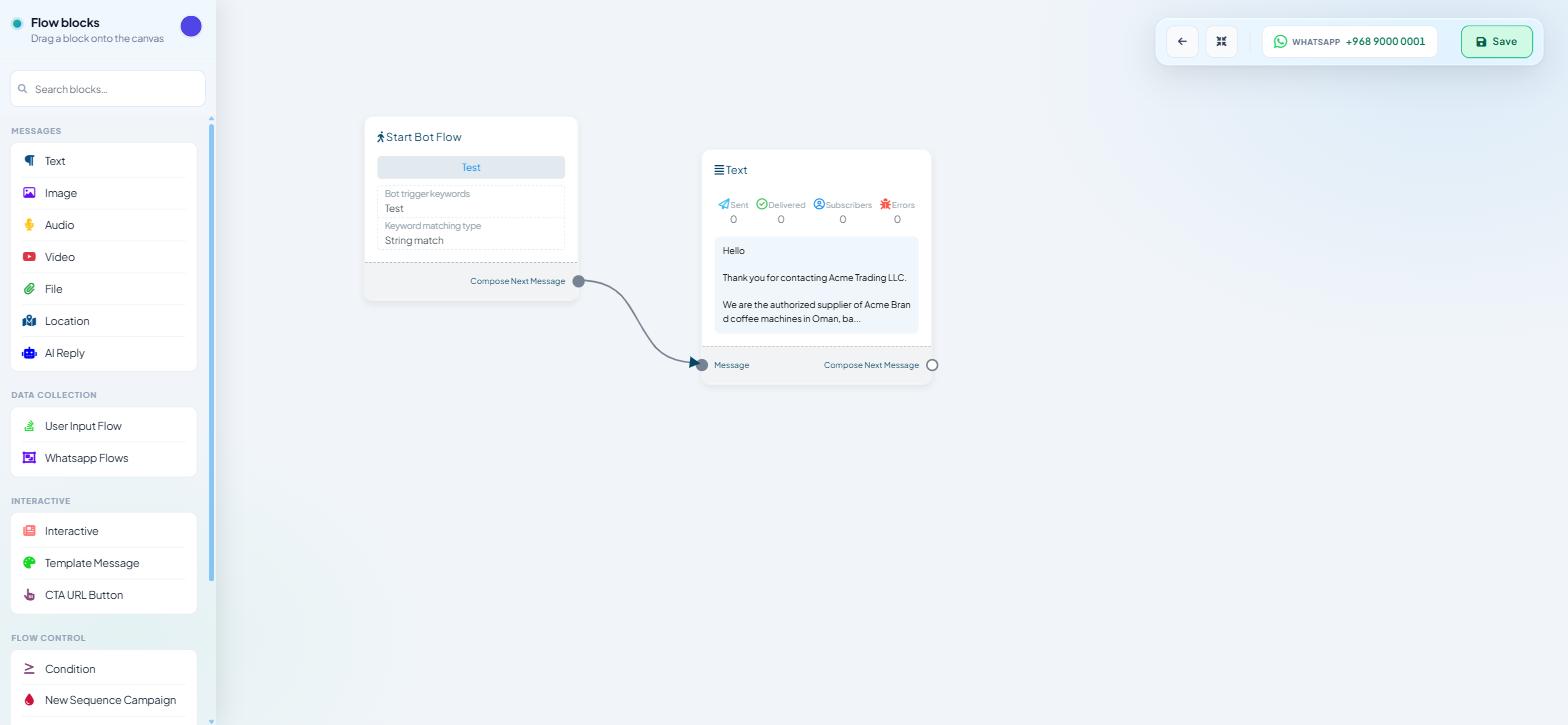
Write the conversation before you build it. Literally, as a script — what the customer says, what the bot says, where it branches. Most design problems are visible in the script and invisible in the canvas.
Build the smallest version. One question, one flow, live for a fortnight. Then read where people fell out and fix that.
Keep the handover obvious. Every flow needs a visible route to a person, and it should stay visible even once the automation is performing well.
What to do next
If you sell online, eCommerce Playbook: WhatsApp for Online Stores goes deeper into the retail patterns above. If your top category turned out to be scheduling, Appointment Booking Automation covers how to design that properly.